07/01/2026
Rebecca Lerback
Long before the F-117A Nighthawk became one of the most recognizable military aircraft in history, it lived in the shadows.
Hidden away at the remote Tonopah Test Range in the Nevada desert, the world’s first operational stealth fighter was protected by layers of secrecy. The men who maintained it disappeared for days at a time, boarded chartered airliners to an isolated base, passed through multiple security checkpoints, and spent their nights preparing an aircraft they couldn’t even acknowledge existed. They couldn’t tell their spouses where they worked. They couldn’t describe what they did. Some couldn’t even mention the weather lest they give away their location.
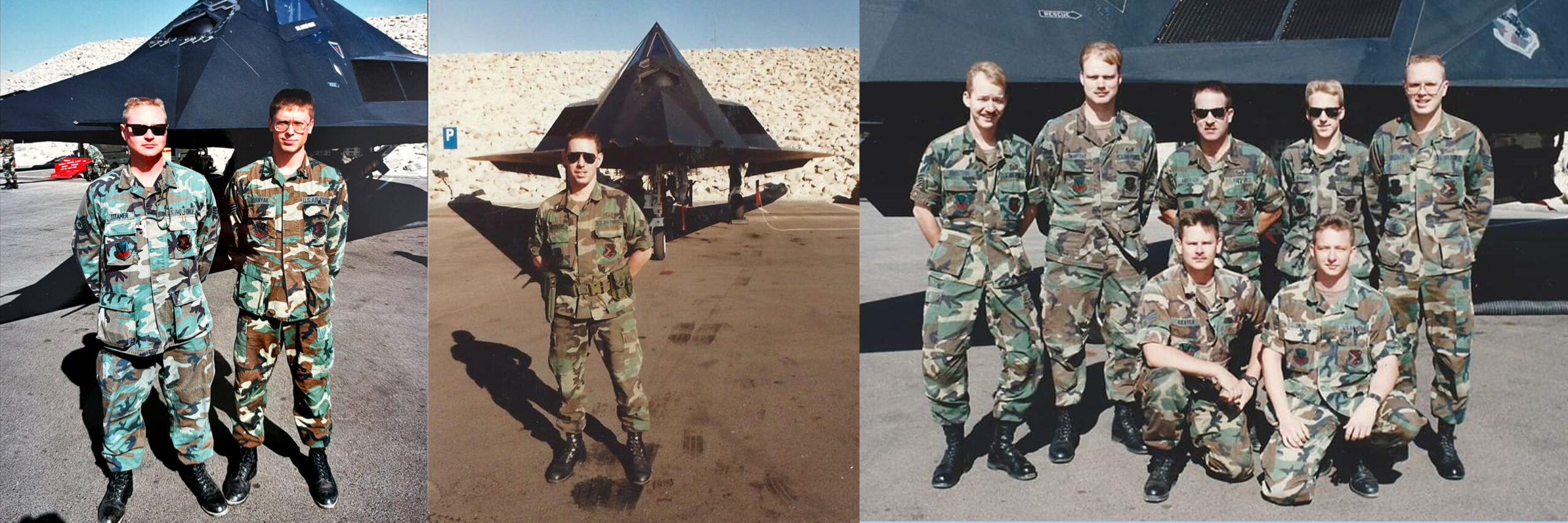
Behind every mission flown was a dedicated team of Air Force maintainers whose skill, ingenuity, and commitment made its success possible. Recently, we sat down with three of them—Al Dutertre, Greg Titamer, and Steve Swartout—who all served with the 416th Tactical Fighter Squadron during Operation Desert Storm. Although each had a different specialty, their memories reveal a common thread: immense pride in being entrusted with one of America’s most closely guarded secrets.
“That Thing Can’t Fly!”
Ask any of the three men what they thought the first time they saw the F-117, and their answers were remarkably similar: disbelief.
Greg remembered seeing a classified orientation film and thinking there was no way the airplane could fly. Steve felt the same after seeing its sharp angles and flat surfaces. Al, only twenty years old when he arrived at Tonopah, recalled being ‘flabbergasted’ and sneaking every glance he could at the aircraft.
Life in the Dark
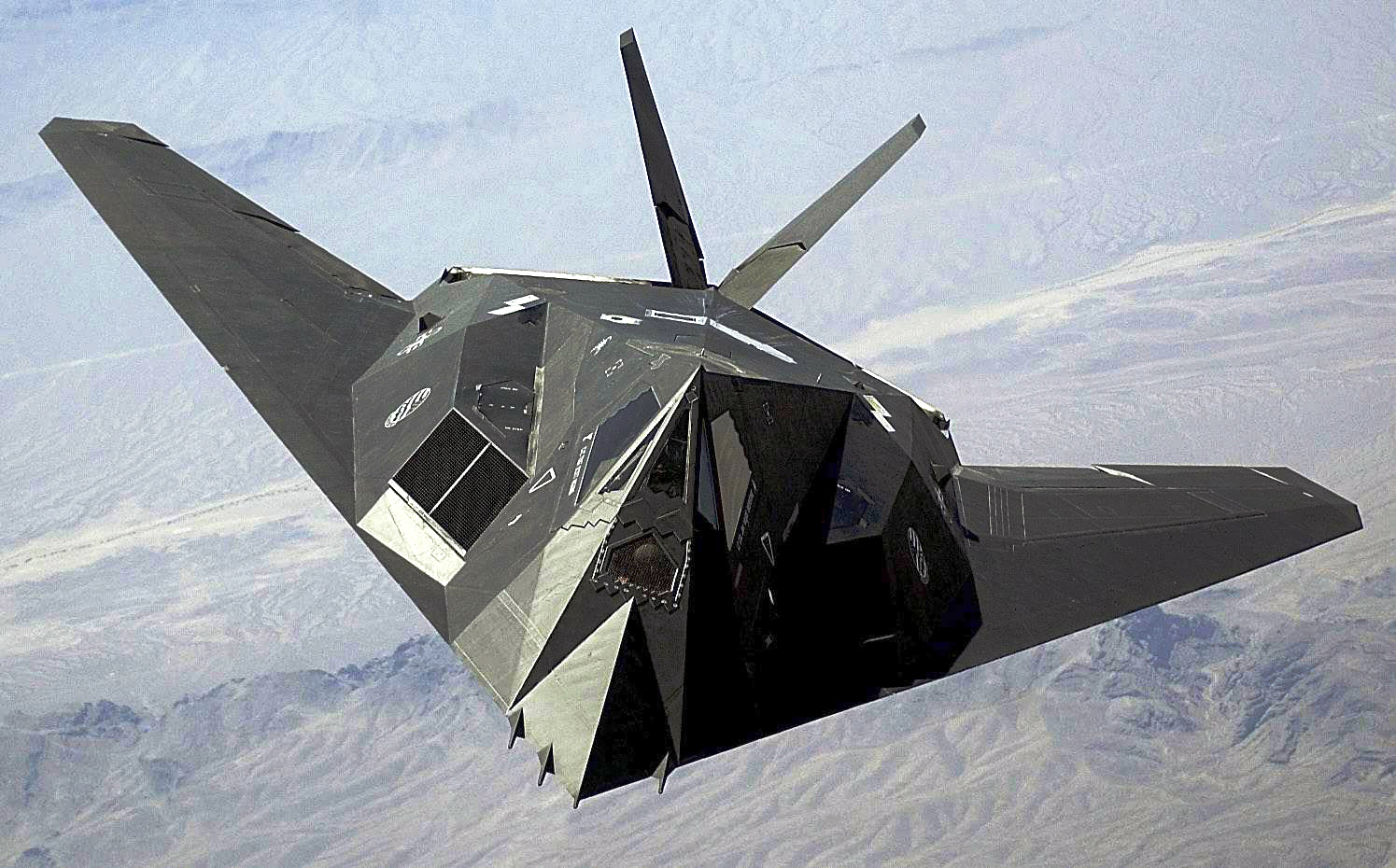
Most weeks began with a charter flight from Las Vegas to Tonopah. The crews lived at ‘Man Camp,’ worked almost exclusively at night, and operated under extraordinary security. Even conversations about the aircraft required secure red phones like the ones you see in the movies.
Steve said his wife knew nothing about where he disappeared four days each week. And he complimented her for never asking, as she understood the importance of the work to our nation even though she didn’t have the details. Despite the secrecy, the men built a close-knit team that prepared for a mission that they were well-trained to execute.
Years of training gave way to Desert Storm. Steve vividly remembered waiting anxiously for aircraft to return from their first combat missions, listening as each pilot checked in safely over the radio. Al recalled the satisfaction of finally putting years of preparation into practice.
Keeping The Impossible Flying
Maintaining the F-117 demanded creativity and perseverance. Al remembered spending an entire shift searching for a single dropped screw hidden beneath the cockpit floor. Steve laughed about the bruises earned navigating the aircraft’s sharp edges in dark hangars.
Greg shared perhaps the most dramatic story. When a failed FLIR turret threatened to cancel an important mission during Desert Storm, he convinced his chief they could replace it without the required crane. Working carefully by hand, the team completed the repair and the aircraft launched on time.
Looking Back
Repeatedly, the three veterans emphasized that the F-117’s success depended on people. Assignment to the program was an honor, reserved for highly skilled, specially selected maintainers who trusted one another and worked together under extraordinary circumstances. Interestingly, both Greg and Steve declined to take the assignment twice when it was offered; they each had other priorities at the time. But as Steve says, “the Air Force had other plans,” when the third notice came, they didn’t have an option. In the end neither of them regretted the assignment, as they became part of aviation history.
More than three decades later, Al, Greg, and Steve (each of whom lives in Oregon) still speak about the Nighthawk with unmistakable pride. For each man, the program defined a significant chapter of his life and remains one of his greatest professional accomplishments.
Today, when visitors stand beneath Evergreen’s F-117A Nighthawk, they marvel at its revolutionary design. But the airplane’s true legacy is also found in the people who quietly kept it flying.
The next time you stand beneath Evergreen’s F-117A Nighthawk, take a moment to look beyond its unmistakable silhouette. Think of the young men who worked through the night by flashlight, solved impossible problems in darkness, and quietly helped change the course of modern warfare. Their stories are every bit as remarkable as the aircraft itself.
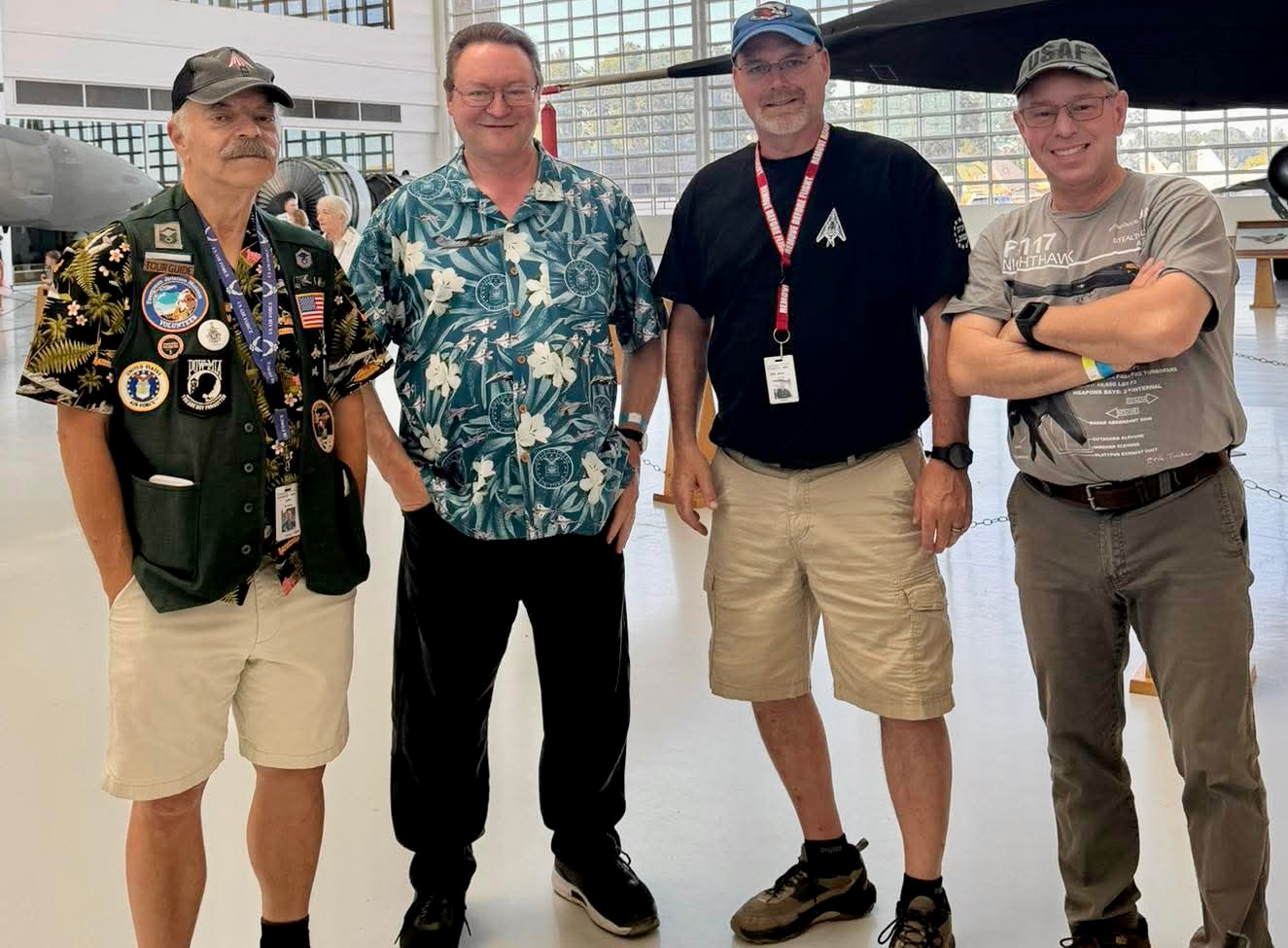
Evergreen Aviation & Space Museum thanks Greg, Steve, and Al for volunteering at Secrets of Stealth event where they shared their experiences with Father’s Day visitors.
# # # # # #